
By a Man Who Believes Privacy Is a Right — Not a Privilege
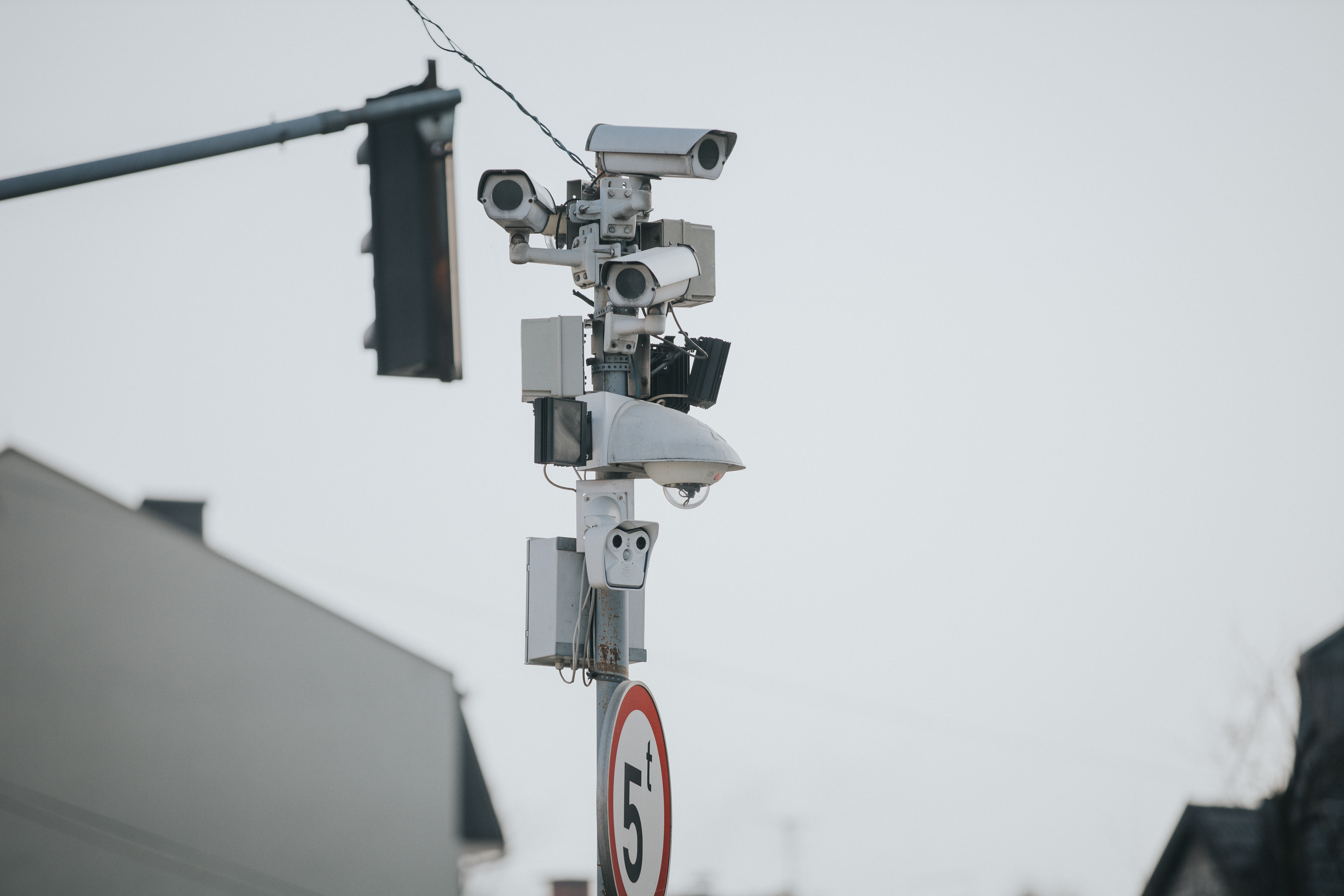
Let me tell you something they don’t teach in school, don’t mention in the news, and actively discourage in polite society:
You are always being watched.
Not by God. Not by ghosts. Not by conspiracy theorists with satellite dishes in their basements.
But by machines, men, and systems that don’t ask permission — because they’ve already decided you don’t need to give it.
Now, before you start checking the smoke detector for a camera (though you should check the smoke detector), let me clarify: I’m not talking about paranoia. I’m talking about awareness . There’s a difference. Paranoia is fear without reason. Awareness is reason without fear.
And in a world where your phone listens, your car tracks, and your smart fridge knows you’re out of butter — awareness isn’t optional. It’s survival.
So this isn’t a post about tin-foil hats. This is a field manual. A primer. A quiet word from one free man to another: How to know when you’re being watched — and what to do about it.
1.- The First Principle: Everyone Is Watched. Not Everyone Is Targeted.
This is critical.
Surveillance is ubiquitous . Cameras on every corner, data harvested from every click, license plates scanned as you drive. That’s the background noise of modern life — the atmospheric radiation of the digital age.
But targeted surveillance ? That’s different. That’s when the machine stops scanning and starts focusing . When the data isn’t just collected — it’s curated . When someone, somewhere, has decided that you are worth a second look.
And that’s when you need to pay attention.
2.- How to Spot Surveillance: The Signs (Or, Reading the Silent Language of Being Watched)
Surveillance leaves traces. Not because the watchers are careless — but because perfection is impossible . Even the best systems have seams. And it’s in those seams that you find the truth.
Here’s what to look for:
1. Patterns That Don’t Add Up
- A car parked in the same spot for three days with different drivers.
- A delivery person who never delivers anything.
- A “journalist” who asks the same question twice.
Patterns repeat. Coincidences don’t. If you see the same face, vehicle, or behavior too many times — it’s not random. It’s reconnaissance.
2. Digital Anomalies
- Your phone gets unusually hot when idle.
- Battery drains fast with no apps running.
- Unexplained reboots or strange noises during calls.
These can be glitches. But they can also be signs of remote access. Assume it’s a glitch — but test it like it’s surveillance.
3. Social Pressure
- People asking about your movements, contacts, or plans in a way that feels probing.
- Friends suddenly interested in your politics, finances, or relationships.
- “Accidental” meetings that happen too often.
Human intelligence (HUMINT) is still the sharpest tool. If someone is gathering intel, they’ll use conversation like a scalpel.
4. Physical Signs
- Scratches near door locks or window frames (signs of entry).
- Items slightly out of place in your home or office.
- Dust patterns disturbed on shelves or electronics.
You don’t need to be a detective. You just need to notice .
3.- Tasks to Test Your Theory (Or, How to Prove You’re Not Crazy)
Suspicion is not proof. But it’s a starting point. Here’s how to test it — without flipping tables or going full fugitive.
Task 1: The Tape Test
Put a tiny piece of transparent tape across your door jamb and frame — just enough to break if the door opens. Same with drawers. Check it daily. If it’s broken — someone’s been inside.
Task 2: The Photo Grid
Take a photo of your room from the same angle every morning. Line them up. Look for micro-changes: a chair moved, a cable shifted, a speck of dust gone.
Task 3: The Burner Phone Drill
Buy a cheap, prepaid phone. Use it once to call a number you don’t normally call. Then watch: do new ads appear? Do people suddenly know things they shouldn’t? Correlation isn’t causation — but it’s worth noting.
Task 4: The Route Variation
Change your routine. Take a different route to work. Shop at a new store. See if the “coincidences” follow you. If they do — you’re not imagining it.
3.- What to Do If You’re Targeted (Or, The Quiet Countermeasures)
First: don’t panic . Panic is the enemy of strategy. Second: don’t overreact . You’re not James Bond. You’re a citizen trying to live freely.
Here’s what works:
- Encrypt everything. Messages, emails, calls. Use Signal. Use ProtonMail. Assume every other channel is compromised.
- Limit metadata. Turn off location services. Use burner accounts for sensitive searches. Your digital footprint is a map — don’t hand it to the enemy.
- Control your environment. Sweep for bugs if you can. Otherwise, assume any room with power could be listening. Have important conversations outside, on foot, in the rain.
- Trust fewer people. Not because everyone is out to get you — but because anyone can be used. Compartmentalize. Share only what’s necessary.
And remember: the goal is not to disappear. The goal is to make surveillance not worth the effort .
Conclusion: This Is Only the Beginning
What I’ve given you here is the surface . The first layer. The equivalent of learning to walk before you run.
Because surveillance today isn’t just about men in trench coats. It’s algorithms, facial recognition, data brokers, IMSI catchers, spoofed Wi-Fi networks, and AI that can predict your behavior better than you can.
And the people who use these tools? They don’t wear badges. They don’t knock. They don’t warn you.
So this post isn’t the end — it’s the first briefing . In future installments, we’ll go deeper:
- How to detect a Stingray device
- What to do if your phone is compromised
- How to build a secure communication cell
- When to go analog — and how to do it right
Because freedom isn’t free. And privacy? Privacy is a skill. One that must be learned, practiced, and defended.
So stay sharp. Stay skeptical. And remember:
Just because you’re paranoid doesn’t mean they’re not after you.
But more importantly —
Just because they’re after you doesn’t mean you have to let them win.
Until next time,
— A man who keeps his curtains closed, his phone off, and his mind open.