
“Anyone who cannot preserve food, purify water, or heal minor wounds is not ‘modern’—they are voluntarily disarmed. And biology obeys no bureaucracy.
Let’s be clear:
Fermentation is not a food trend.
It’s not “gut health.” It’s not Instagram aesthetics (jars in sunlight, linen napkins, soft focus).
Fermentation is low-tech biotechnology—and for most of human history, it was the difference between life and mass death.
Scurvy didn’t kill sailors because lemons were rare.
It killed them because navies forgot how to ferment cabbage.
When Captain Cook carried sauerkraut (not citrus) on his Pacific voyages, not a single man died of scurvy.
Why? Because Lactobacillus doesn’t need a supply chain. It needs only salt, time, and courage.
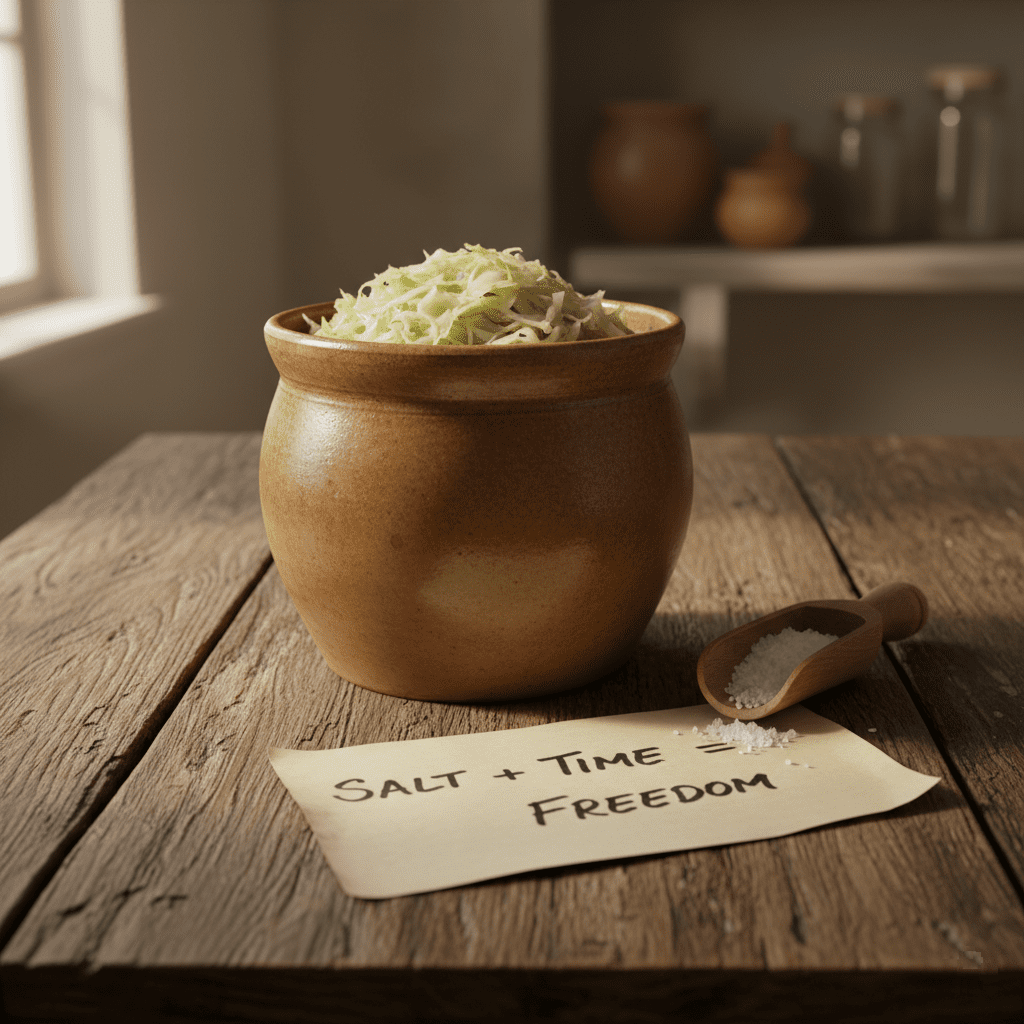
Your grandmother’s crock wasn’t “quaint.”
It was a biological fortress.
And in an age when corporations patent seeds, governments regulate herbs, and hospitals ration care—wild fermentation is one of the last unownable technologies on Earth.
No one can copyright Lactobacillus plantarum.
No FDA approval is needed to turn cabbage into immunity.
No algorithm decides if your sauerkraut “qualifies” as medicine.
It just works.
Why Salt Is a Covenant—Not a Condiment
Salt doesn’t just flavor.
It selects.
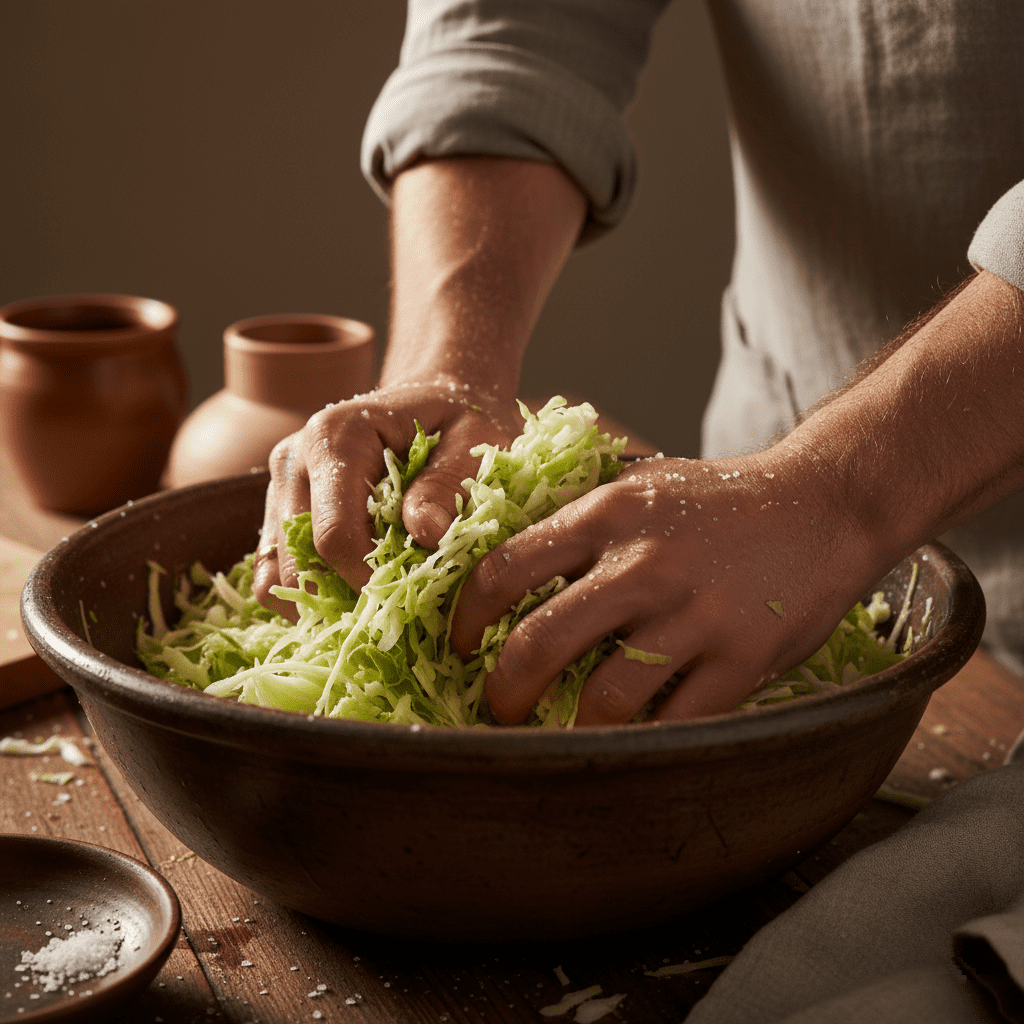
When you mix cabbage with salt, you create a brine too harsh for spoilage bacteria—but perfect for hardy, beneficial lactobacilli. In 3–7 days, they take over. They eat sugar. They produce lactic acid. They preserve. They fortify.
This isn’t “probiotics.”
This is ecological warfare in a jar—and you’re the general.
And the terms of the covenant are simple:
✅ You provide salt, vegetables, and patience.
✅ The microbes provide preservation, nutrition, and resilience.
No middlemen. No markup. No expiration date stamped by a corporation.
Just a pact between human and microbe—as old as agriculture.
The Three-Ingredient Rebellion
You don’t need “starter cultures,” airlocks, or $40 fermentation weights.
You need:
- Cabbage (or carrots, radishes, cucumbers—anything crisp)
- Salt (non-iodized; iodine inhibits fermentation)
- Time (5–10 days at room temperature)
Method (the way humans have done it for 6,000 years):
- Shred 1 medium head cabbage (~900g).
- Mix with 1 tbsp (15g) salt. Massage 5 minutes until juices flow.
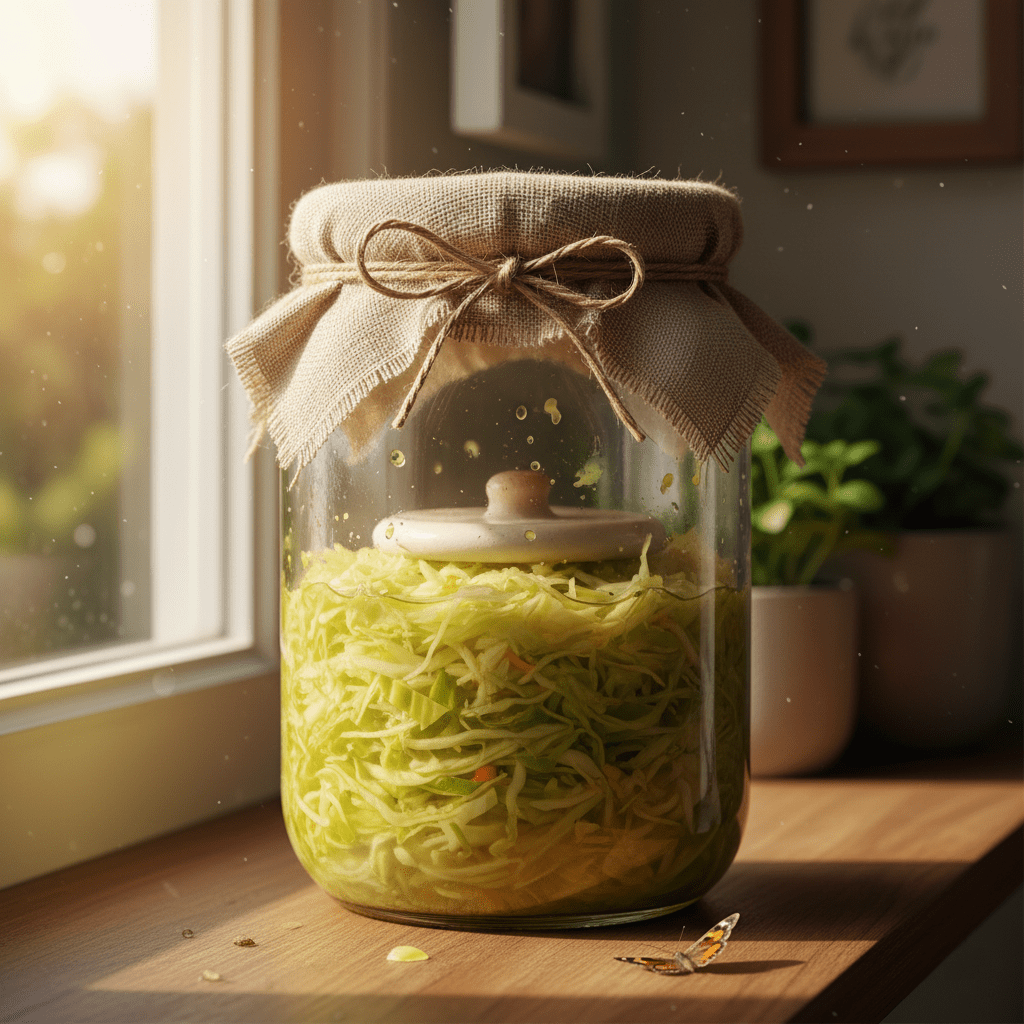
- Pack tightly into a clean jar, pressing down until brine covers the cabbage.
- Weight it down (a smaller jar inside, a stone, or even a ziplock with water).
- Cover with cloth. Wait.
- In 5 days: tangy, crisp, alive.
- In 10: deeper, funkier, stronger.
That’s it.
No electricity. No special gear. No permission.
Yet this jar contains:
- Vitamin C (more than raw cabbage, increasing during fermentation)
- B vitamins (especially B12, rare in plants)
- Enzymes that pre-digest food
- Lactobacilli that outcompete pathogens in your gut
This isn’t “wellness.”
It’s biological self-reliance.
Why Store-Bought “Probiotics” Are Theater
Let’s be honest:
That $35 bottle of “probiotics” on the shelf?
- Most strains die in stomach acid before reaching your gut.
- Doses are often too low to colonize.
- They’re grown in labs on GMO soy or dairy—then freeze-dried into powders that may not revive.
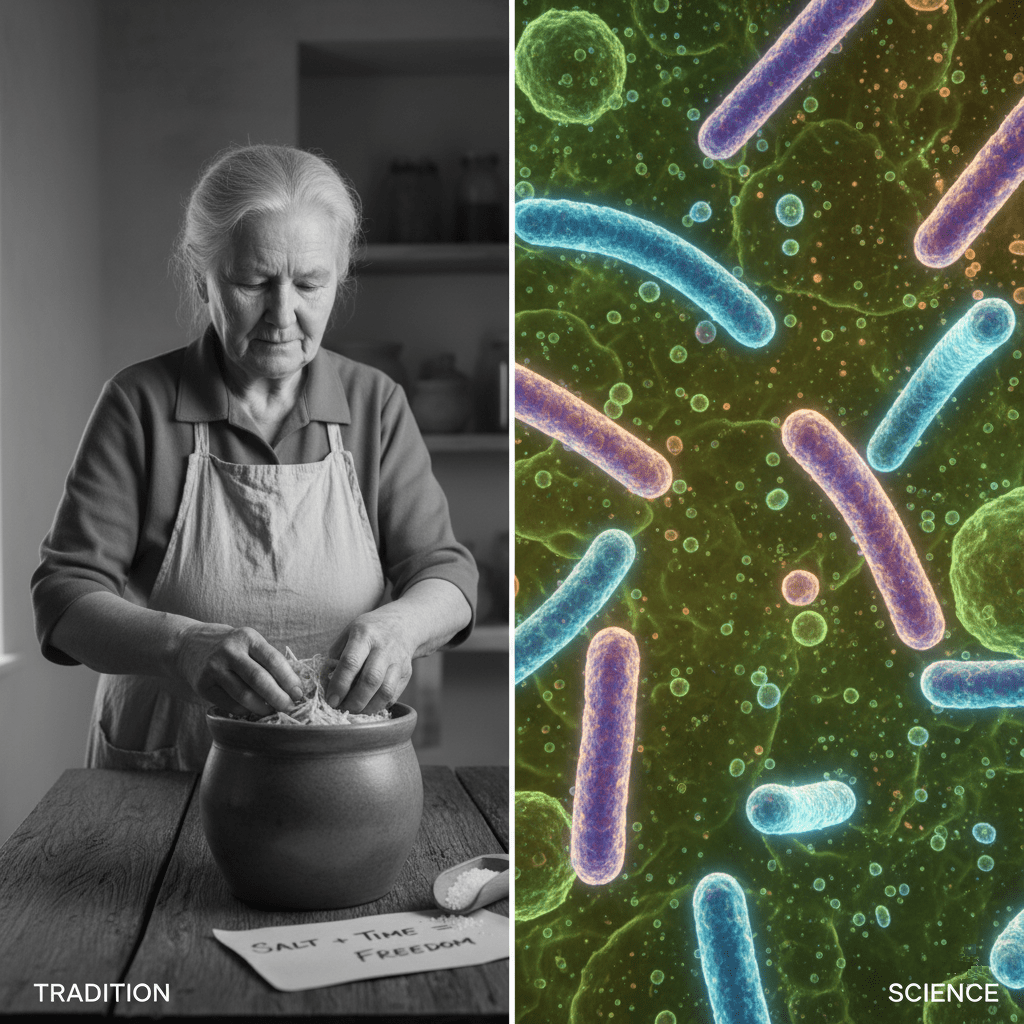
Meanwhile, a $2 head of cabbage + $0.10 of salt = 10 trillion live, acid-resistant, food-adapted microbes—free with every bite.
And unlike pills, fermented food feeds your native microbiome. It doesn’t just drop off “reinforcements.” It builds infrastructure.
Your gut isn’t a warzone needing mercenaries.
It’s an ecosystem needing stewardship.
Fermentation is how you tend it.
Fermentation as a Moral Act
Every time you ferment food, you reject three lies:
- “You need experts to stay healthy.”
→ No. You need observation, patience, and cabbage. - “Real medicine is expensive and patented.”
→ No. Real medicine is often simple, ancient, and freely replicable. - “Your body is too fragile to heal itself.”
→ No. Your body is a co-evolved ecosystem—if you feed it right.
In the past, people didn’t wait for medics. They carried field dressings, knew basic surgery, and understood that prevention beats cure. Fermentation is prevention: a daily dose of resilience, built into your diet.
When stress hits (and it will), a strong gut = a strong immune response = fewer days down, fewer dependencies, more freedom.
Beyond Cabbage: The Sovereign Pantry
Once you master sauerkraut, expand:
- Bean paste: Cooked beans + garlic + salt + oil. Ferments 2–3 days. Spread on bread, stir into stews.
- Hot sauce: Chilies + garlic + salt + brine. Ferments 2 weeks. Adds fire and flora.
- Yogurt (no starter needed): Leave raw milk (or pasteurized + a spoon of yogurt) at 100°F for 12 hours. Lactobacillus is everywhere—even in your kitchen air.
This isn’t “hobby farming.”
It’s food sovereignty in action.
Final Orders
- Buy one head of cabbage and a box of pickling salt.
- Make one jar this week.
- Taste it on day 5. Then day 10. Note the change.
- Share half with a neighbor. Teach them the covenant.
Because freedom doesn’t come in a pill.
It comes in a jar—bubbling, alive, and utterly ungovernable.
Now go make peace with the microbes.
They’ve been waiting for you.
3 thoughts on “The Salt Covenant: Why Your Grandmother’s Pickling Jar Was a Weapon of Sovereignty”