
Every week, a new guru (billionaires included), podcast, or viral thread repeats the same tired refrain: “With AI, human labor will go extinct, machines will produce everything at zero cost, and money will lose all meaning.”
It sounds nice. It sounds like progress. And it’s, quite simply, a comfortable lie.
Whether born of economic ignorance, a conveniently optimistic futurist narrative, or even deliberate misinformation, this myth ignores an uncomfortable truth: scarcity isn’t coded—it’s inherited from the real-world physics we live in. And as long as physics remains in charge, money will remain indispensable.
🆕 New here?
food&arms isn’t about fear, gear, or survivalism. It’s the daily practice of freedom—through food, thought, and action.
→ Start with our manifesto: What Is food&arms and what changed.
Money Isn’t a Capitalist Invention: It’s the Thermometer of Reality
We’re not here to debate the merits of national currencies or fiat money itself. We’re here to examine money’s function as an economic tool—as you’ll see next.
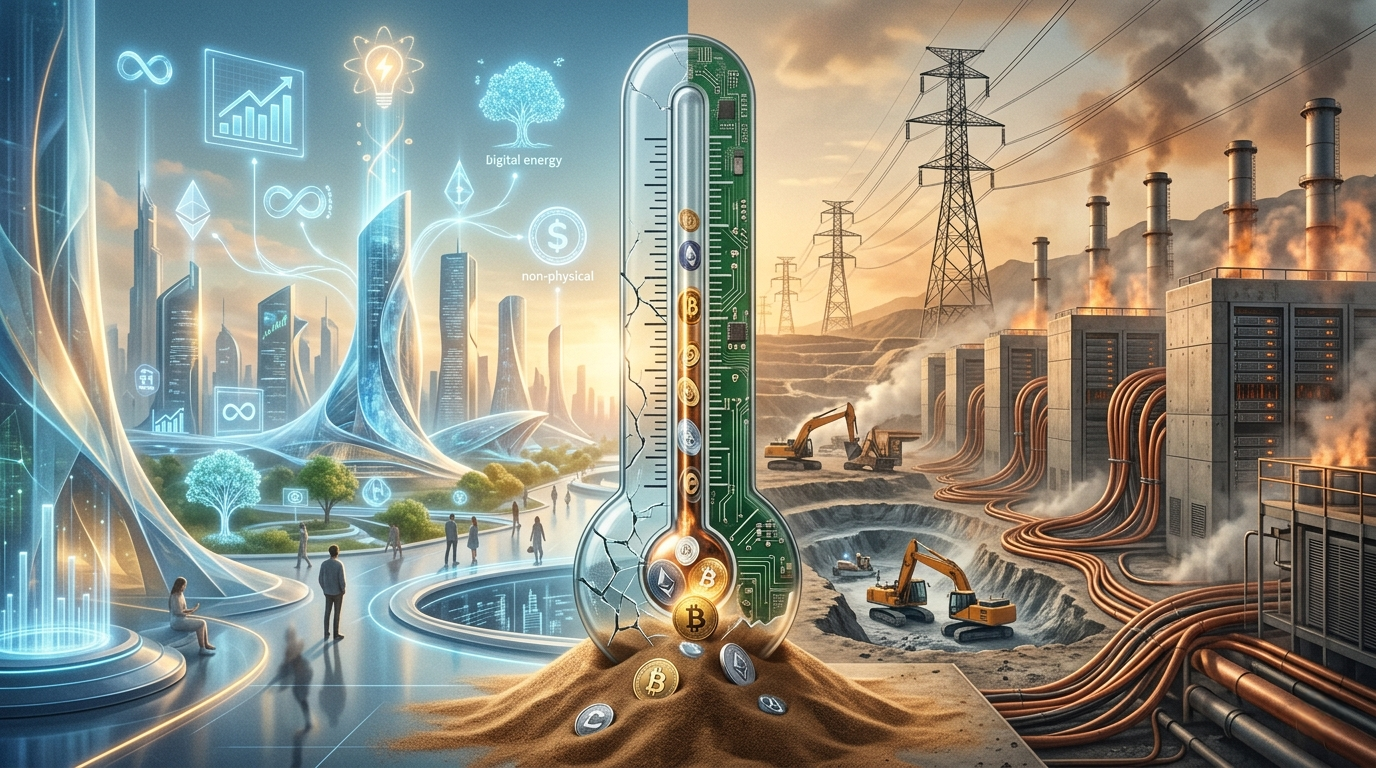
Reducing money to a “mere medium of exchange” is like calling a thermometer a “pretty glass tube.” Its real function is simply practical: measuring what things are worth so we can decide what gets done first, what gets delayed, and what gets scrapped.
If everything cost zero, logic would say we could have it all. Why not order a Lamborghini, a beachfront mansion, a yacht, and three hectares of forest? Simple: because the world doesn’t run on wishes—it runs on limits. Time, space, minerals, energy, and productive capacity are all finite.
Money isn’t just an elite game. It’s the language we use to navigate that finitude. Without it, there’s no prioritization. Without prioritization, there’s collapse. Pretending to achieve absolute gratuity isn’t a technological leap—it’s a willful ignorance of how the material universe actually works.
Farewell to Human Labor… So Who Decides Now?
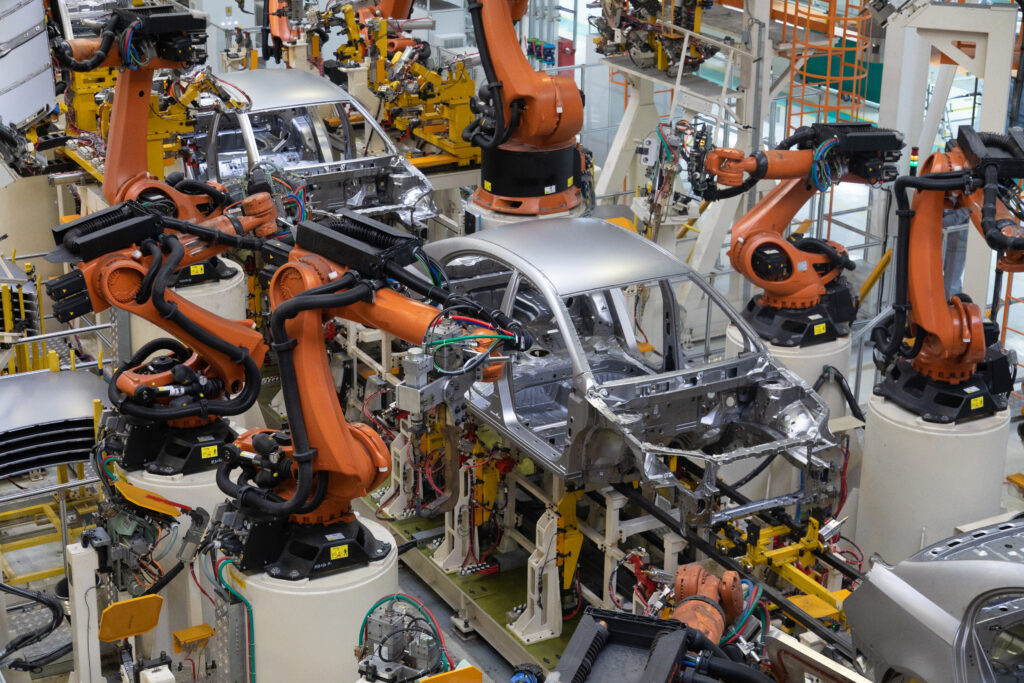
Let’s suppose, for a moment, that AI and robotics completely eliminate the human factor from production. Problem solved? Not even close.
In economics, production rests on two pillars: Labor (L) and Capital (K). Remove L, and K remains. And with capital comes the need to invest, build, maintain, and take risks. Someone—or some algorithm—still has to decide whether to manufacture chips, hospitals, solar panels, or autonomous vehicles.
That decision isn’t philosophical; it’s mathematical, logistical, and urgent. And to make it, you need signals. Prices. Costs. Relative urgencies. That’s what money is for. Without it, the “superintelligence” doesn’t/can’t prioritize—it guesses. And guessing at a planetary scale isn’t progress. It’s a lottery.
The Myth of Free Production and the Elephant Everyone Ignores
“AI will drive costs to zero thanks to efficiency.” Nice slogan. False in practice.
Efficiency doesn’t erase material reality. Robots wear out. Chips become obsolete. Minerals must be extracted, transported, and refined. And then there’s the real giant Elephant in the room: energy.
The data centers powering AI don’t run on good intentions—they devour electricity at a scale that already surpasses the consumption of entire countries. Yes, efficiency per calculation keeps improving, but total demand never stops growing (thank you, Jevons paradox). Energy has a cost. Its infrastructure does too.
As long as physical limits exist, there will be a price. And as long as there’s a price, there will be money or something that takes its role, the function remains. Period.
AI Won’t Kill Money. It Will Force It to Evolve.

I’m not denying that AI is redefining the labor market, accelerating productivity, and raising brutal ethical and distributional challenges. (Those deserve their own analysis, and we’ll get to them in a future post.)
But confusing a technological leap with the end of economics is dangerously naïve. Scarcity doesn’t vanish just because algorithms get faster. Prioritization doesn’t become obsolete because machines work 24/7. Money isn’t a historical whim; it’s the tool humanity built to survive its own limits.
The question isn’t whether it will disappear. The question is: are we ready to adapt to its next form, or will we keep dreaming up utopias that ignore physics, logistics, and real-world economics?
And if the fantasy of total gratuity sounds too naive, you might be clinging to its “compromise solutions.” Enter the so-called Universal Maximum Income—a variant just as far-fetched as the first—and its less romantic cousin: Universal Basic Income (UBI). Pilots of the latter have already been run, yes, but all tightly constrained by time, scale, and controlled conditions. Do they hold up when AI redefines production at a planetary scale?
Who sustains the monetary flow when traditional employment shrinks? We’ll tackle that in the next article. For now, hold onto the essential truth: money isn’t disappearing. It’s just changing shape. And anyone who thinks we can ignore its rules is betting against reality.