
“A dull knife is worse than no knife at all—it’s a lie pretending to be a tool.”
When it comes to breaking down meat, one blade rules them all: the 8-inch chef’s knife. Not a serrated toy. Not a flimsy filet blade. A real, full-tang, high-carbon steel weapon that’ll turn primal cuts into dinner without apology.
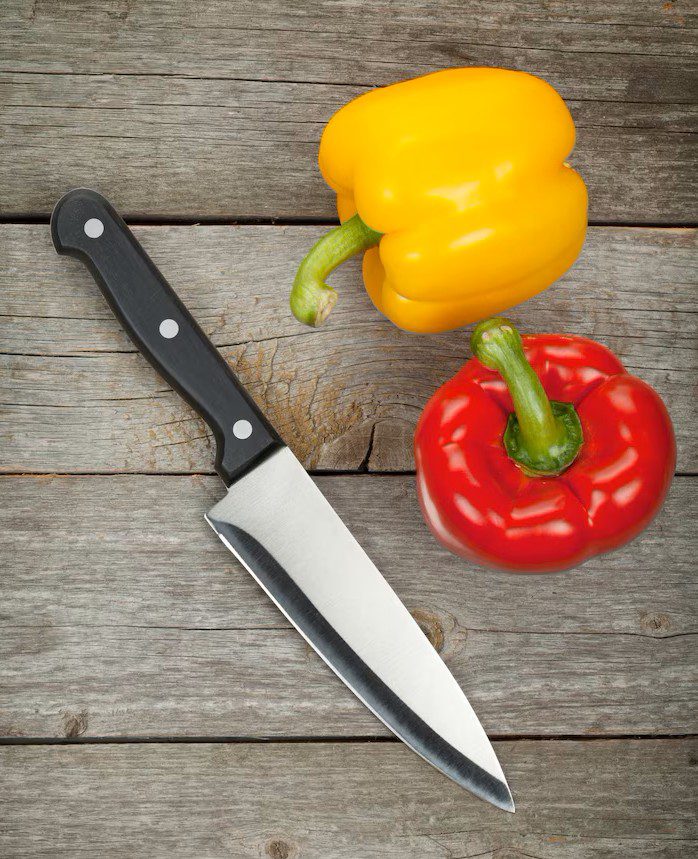
The Specs (What Makes a Knife Worth Your Grip)
- Blade: 8-10 inches of high-carbon steel (holds an edge like a samurai sword)
- Weight: Heavy enough to split cartilage, light enough for precision
- Handle: Full tang (the metal runs through the grip) — no glued-on garbage
- Brands That Won’t Betray You:
- Victorinox Fibrox ($50, indestructible)
- Wüsthof Classic ($150, German precision)
- Dalstrong Gladiator ($120, looks as mean as it cuts)
Advantages from this Knife?
- Versatility: Breaks down chickens, trims brisket fat, and dices onions without switching tools.
- Control: The curved blade lets you rock-chop herbs or plunge-cut through joints.
- Durability: A well-maintained chef’s knife outlives most marriages.
Example of Pro Butcher Moves (Test Your Steel)
- Breaking Down a Chicken:
- Remove legs at the joint (no hacking).
- Split the breast from the backbone with one smooth stroke.
- Never force it—let the knife do the work.
- Trimming Steak:
Angle the blade away from the meat to shave off fat in clean sheets.
Maintenance (Or How to Avoid Shame)
- Hone Weekly: Use a steel rod to realign the edge.
- Sharpen Monthly: A 1000-grit whetstone keeps it lethal.
- Storage: Never toss it in a drawer. Use a magnetic strip or knife block.
Final Warning
“A cheap knife will make you hate cooking. A sharp knife will make you respect it.”
Challenge:
Buy one good chef’s knife. Use it for everything for a month. Report back when you’ve stopped reaching for anything else.
Soon… a whetstone tutorial